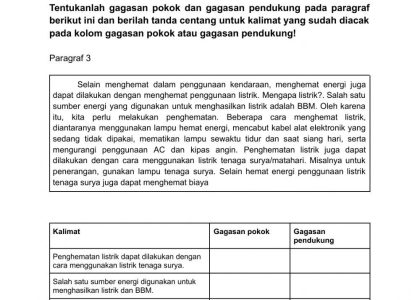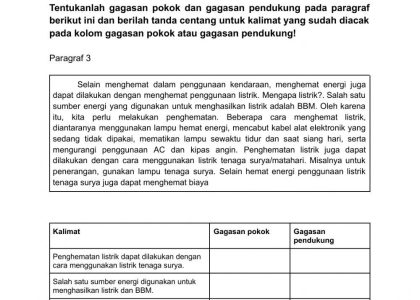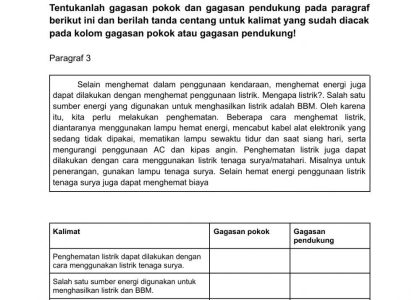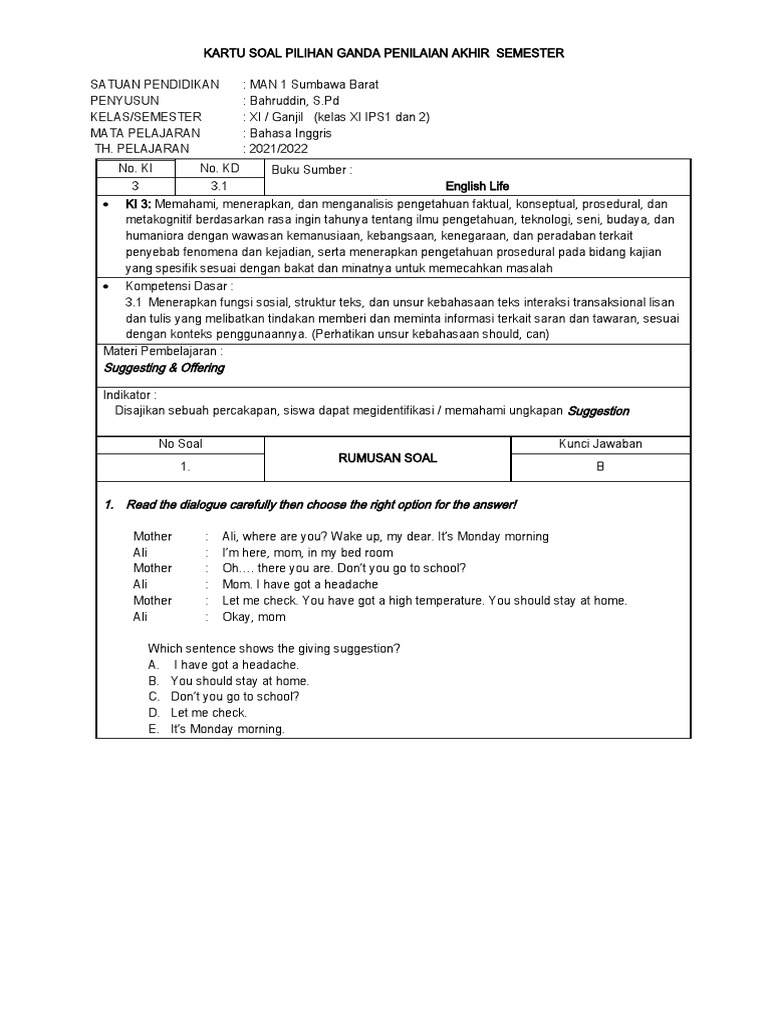
Dalam kurikulum Bahasa Inggris kelas 10, pemahaman terhadap teks menjadi salah satu kompetensi inti yang harus dikuasai siswa. Kompetensi Dasar (KD) 3.6, yang umumnya berfokus pada pemahaman berbagai jenis teks seperti descriptive text, narrative text, recount text, procedure text, dan news item text, memegang peranan krusial dalam membentuk kemampuan membaca kritis dan analitis siswa. Untuk mengukur sejauh mana pemahaman ini tercapai, kartu soal pilihan ganda menjadi alat evaluasi yang efektif. Artikel ini akan mengupas tuntas tentang kartu soal pilihan ganda untuk KD 3.6 Bahasa Inggris kelas 10, mulai dari pentingnya, prinsip pembuatannya, hingga contoh soal yang dapat diadaptasi oleh para pendidik.
Mengapa Kartu Soal Pilihan Ganda Penting untuk KD 3.6?
Kartu soal pilihan ganda menawarkan beberapa keunggulan dalam mengevaluasi pemahaman teks:
Prinsip-Prinsip Pembuatan Kartu Soal Pilihan Ganda yang Efektif untuk KD 3.6
Pembuatan kartu soal yang berkualitas membutuhkan pemikiran yang matang dan pemahaman mendalam tentang KD yang akan diukur. Berikut adalah beberapa prinsip kunci:
Contoh Kartu Soal Pilihan Ganda untuk KD 3.6 Bahasa Inggris Kelas 10
Berikut adalah contoh kartu soal yang mencakup berbagai jenis teks dan jenis pertanyaan, dirancang untuk menguji KD 3.6.
>
Kartu Soal Bahasa Inggris – Pilihan Ganda
Mata Pelajaran: Bahasa Inggris
Kelas: X
Kompetensi Dasar: 3.6 Menganalisis fungsi sosial, struktur teks, dan unsur kebahasaan pada berbagai jenis teks descriptive, narrative, recount, procedure, dan news item, sesuai dengan konteks penggunaannya.
Alokasi Waktu:
Petunjuk: Bacalah teks berikut dengan saksama, lalu pilihlah jawaban yang paling tepat untuk setiap pertanyaan.
>
Text 1: Descriptive Text
Mount Bromo is one of the most iconic and active volcanoes in East Java, Indonesia. It is part of the Bromo Tengger Semeru National Park. The landscape around Mount Bromo is truly breathtaking. Upon reaching the viewpoint, visitors are greeted by a vast expanse of volcanic sand, known as the Sea of Sand. From this elevated position, the majestic cone of Mount Bromo stands prominently, often shrouded in a mystical haze. The crater of Mount Bromo is constantly emitting white smoke, a clear sign of its ongoing volcanic activity. The sunrise view from the nearby Mount Penanjakan is legendary, casting a golden glow over the entire volcanic complex and creating an unforgettable spectacle. The area is also home to the Tenggerese people, a community with unique cultural traditions.
Questions for Text 1:
What is the main topic of Text 1?
a. The history of Mount Bromo
b. The geological formation of East Java
c. The natural beauty and features of Mount Bromo
d. The daily life of the Tenggerese people
Which of the following best describes the landscape around Mount Bromo?
a. Lush green forests and rivers
b. A barren desert with rocky plains
c. A vast expanse of volcanic sand
d. Towering skyscrapers and modern buildings
The word "iconic" in the first sentence is closest in meaning to:
a. Famous
b. Ancient
c. Dangerous
d. Remote
What is a prominent characteristic of Mount Bromo’s crater?
a. It is filled with lava
b. It is constantly emitting white smoke
c. It is dormant and inactive
d. It is a deep, dark abyss
What is described as "legendary" in the text?
a. The cultural traditions of the Tenggerese people
b. The sunrise view from Mount Penanjakan
c. The active status of Mount Bromo
d. The journey through the Sea of Sand
>
Text 2: Narrative Text
Once upon a time, in a small village nestled beside a shimmering lake, lived a kind-hearted girl named Anya. She had a special gift: she could talk to animals. One day, a fierce storm raged, and the lake began to swell, threatening to flood the village. The villagers panicked, unsure of what to do. Anya, however, ran to the edge of the lake and began to speak to the water spirits. She pleaded with them to calm the waters and spare her home. Miraculously, the storm began to subside, and the lake’s fury lessened. The water spirits, touched by Anya’s bravery and compassion, agreed to recede. From that day on, the villagers revered Anya, understanding that true strength often lies in gentleness and understanding.
Questions for Text 2:
What is the genre of Text 2?
a. Descriptive
b. Recount
c. Narrative
d. Procedure
What was Anya’s special gift?
a. She could predict the weather.
b. She could communicate with animals.
c. She could control the wind.
d. She could build strong shelters.
Why did the villagers panic during the storm?
a. They were afraid of Anya.
b. They did not know how to speak to animals.
c. The lake was threatening to flood the village.
d. The water spirits were angry.
How did Anya help her village?
a. She built a dam to stop the flood.
b. She convinced the water spirits to calm the storm.
c. She led the villagers to higher ground.
d. She calmed the animals to prevent further panic.
What can be inferred about Anya’s character from the story?
a. She was selfish and only cared about herself.
b. She was courageous and empathetic.
c. She was afraid of storms and water.
d. She was powerful and demanded respect.
>
Text 3: Recount Text
Last weekend, my family and I decided to visit the local zoo. It was a sunny Saturday morning when we set off. Upon arrival, the first thing we saw was a majestic lion pacing in its enclosure. We then proceeded to the monkey exhibit, where the playful creatures were swinging from branches and chattering loudly. My younger sister was particularly delighted by the colorful parrots. Later, we enjoyed watching the graceful elephants being fed. Before leaving, we stopped by the reptile house, which, despite its slightly creepy inhabitants, was fascinating. It was a truly enjoyable and educational outing.
Questions for Text 3:
What is the purpose of Text 3?
a. To describe the features of a zoo.
b. To instruct readers on how to visit a zoo.
c. To retell a personal experience of visiting a zoo.
d. To inform readers about different animal species.
When did the author and their family visit the zoo?
a. On a rainy Tuesday afternoon
b. On a sunny Saturday morning
c. On a cloudy Friday evening
d. On a warm Sunday afternoon
Which animal exhibit was the author’s younger sister particularly delighted by?
a. The lions
b. The elephants
c. The monkeys
d. The parrots
What can be inferred about the author’s overall feeling about the zoo visit?
a. They found it boring and uneventful.
b. They thought it was too expensive.
c. They found it enjoyable and educational.
d. They were disappointed by the animals.
>
Text 4: Procedure Text
How to Make a Simple Fruit Salad
Making a refreshing fruit salad is easy and can be a healthy snack. Here’s how you can do it:
Ingredients:
Steps:
Questions for Text 4:
What is the primary purpose of Text 4?
a. To describe the benefits of eating fruit.
b. To explain how to make a fruit salad.
c. To list the different types of fruits.
d. To persuade readers to eat healthy.
Which of the following is an optional ingredient for the fruit salad?
a. Strawberries
b. Lemon juice
c. Honey
d. Blueberries
What is the first step in making the fruit salad?
a. Chopping the fruits
b. Combining the fruits in a bowl
c. Washing the fruits
d. Adding honey
Why is lemon juice added to the fruit salad?
a. To make it sweeter
b. To add a crunchy texture
c. To prevent browning and add flavor
d. To make the fruits softer
>
Text 5: News Item Text
Local Library Launches New Digital Reading Program
JAKARTA – The Central City Library has officially launched its new digital reading program, "Read Anywhere," aimed at increasing literacy rates and providing accessible reading materials to the community. The program, introduced yesterday at a press conference, allows library members to download thousands of e-books and audiobooks directly to their smartphones and tablets.
"We are thrilled to offer this innovative service," said Mrs. Ani, the head librarian. "In today’s fast-paced world, digital access is crucial. ‘Read Anywhere’ ensures that our patrons can continue to learn and enjoy literature regardless of their location or time constraints." The program also features online reading challenges and virtual book clubs to foster a sense of community among readers. Initial feedback from early testers has been overwhelmingly positive, with many praising the user-friendly interface and the extensive collection.
Questions for Text 5:
What is the main event reported in Text 5?
a. A press conference about library funding.
b. A new digital reading program launched by the Central City Library.
c. A virtual book club meeting.
d. A report on literacy rates in Jakarta.
What is the name of the new digital reading program?
a. Digital Library Access
b. Read Online
c. E-Book Central
d. Read Anywhere
Who is Mrs. Ani?
a. A patron of the library
b. A digital content creator
c. The head librarian
d. A member of a virtual book club
What is one of the benefits of the "Read Anywhere" program mentioned in the text?
a. It provides free internet access.
b. It allows members to download e-books and audiobooks.
c. It organizes physical book signings.
d. It offers free printing services.
What has been the initial feedback from early testers of the program?
a. Mostly negative, with complaints about the interface.
b. Mixed, with some positive and some negative comments.
c. Overwhelmingly positive, praising the user-friendly interface.
d. No feedback has been collected yet.
>
Tips Tambahan untuk Guru:
Kesimpulan
Kartu soal pilihan ganda yang dirancang dengan baik merupakan instrumen yang ampuh untuk mengevaluasi penguasaan KD 3.6 dalam pemahaman berbagai jenis teks Bahasa Inggris kelas 10. Dengan mengikuti prinsip-prinsip pembuatan yang telah diuraikan, guru dapat menciptakan soal yang tidak hanya mengukur kemampuan siswa secara akurat, tetapi juga mendorong mereka untuk berpikir kritis dan analitis. Teks yang relevan, pertanyaan yang bervariasi, dan opsi jawaban yang cerdas adalah kunci untuk menghasilkan kartu soal yang efektif. Dengan demikian, siswa akan lebih siap menghadapi tantangan dalam memahami dan menginterpretasikan berbagai bentuk teks berbahasa Inggris.
>


Rerum congue dis illo ridiculus beatae nesciunt assumenda nostra. Viverra ipsum fuga, per ipsam leo sodales litora ullam assumenda ultrices.